
Breaking the tradition of not naming countries, the first draft of the final document of the 2010 Nuclear-Non Proliferation Treaty Review conference has asked India, Pakistan and Israel to sign the NPT and the CTBT. "The conference calls upon India, Israel and Pakistan to accede to the treaty as non-nuclear weapon States, promptly and without conditions, thereby accepting an internationally legally binding commitment not to acquire nuclear weapons," it said.
Ahead of the Non Proliferation Treaty review conference, the United States on Friday said the Indo-US civil nuclear deal has not weakened the Nuclear Non-Proliferation Treaty as the pact comes with a number of 'transparency mechanisms.'
Even though India is not a signatory to the Nuclear Non-Proliferation Treaty, the Obama Administration said on Wednesday that New Delhi had a key role to play in strengthening of global nuclear non-proliferation regime.
The protest was carried out ahead of Monday's opening of a month-long conference of parties to the Nuclear Non-proliferation Treaty.
In a departure from tradition of not singling out countries by name, the United Nations has asked India, Pakistan and Israel to join the Nuclear non-Proliferation Treaty and the Comprehensive Test Ban Treaty without further delay and pre-conditions.

In an expected showdown, Iranian President Mahmoud Ahmadinejad and United States Secretary of State Hillary Clinton launched a verbal attack against each other at a Nuclear Non-Proliferation Treaty meeting at the United Nations on Monday.In his 35-minute speech at the NPT Review Conference, Ahmadinejad slammed Washington for bullying Tehran over its nuclear programme while not pushing the 'Zionist regime' (Israel) for getting rid of its nuclear weapons.
According to a US State Department factsheet, 'Washington has no specific plans to develop low yield nuclear weapons but the Nuclear Posture Review highlighted the importance of being able to respond to changes in the security environment'.
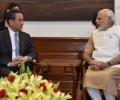
Wang and Swaraj also discussed issues relating to annual BRICS summit which will be hosted by India in Goa in October.

United States president-elect Donald Trump's tweet for strengthening and expansion of country's nuclear arsenal is indicating a major policy change as against the Obama Administration which had pushed for reduction and ultimately elimination of nuclear weapons.

Vajpayee had always felt that India must act with conviction and panache. He decided that, irrespective of the attendant risks, he would undertake what many felt was a precarious course. A fascinating excerpt from N K Singh's Portraits Of Power: Half A Century Of Being At Ringside on Atalji's 96th birthday, December 25.

The strategy, President Donald Trump said, is tailored and flexible to address the wide array of threats in the 21st century.
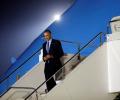
'Obama's visit to Hiroshima must generate a fresh debate in the international community about how to reduce the salience of nuclear weapons in international politics and how to disarm the world from these monstrous weapons forever,' says Sanjeev Shrivastav..

'While economic ties are making incremental progress, it is in the security and strategic domains that the India-Japan synergy is more compelling,' says Dr Rajaram Panda.
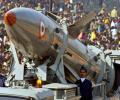
It is time the new government, unencumbered with the burden of past, initiates a wide ranging review and open debate on the security issues to rectify our short term and long term shortcomings. It has taken some wise steps but has to go beyond this to identify the structural weakness and create systems, says Colonel (retd) Anil Athale.

20 years ago this day, May 11, 1998, India conducted its second nuclear test at Pokharan in Rajasthan. In a fascinating interview on Rediff.com, K Subrahmanyam revealed how Indian PMs reacted to nuclear ambitions.
